

USAA Home Insurance and Roofing Claims: A Proven Guide to Getting Your Roof Covered
If you are a service member, veteran, or military spouse anywhere from Hattiesburg to the Gulf Coast, your USAA home insurance policy matters most after a storm. Most homeowners do not read it closely until they find shingles in the yard, granules in the gutters, or a ceiling stain after heavy rain. That is when the details start affecting whether roof damage is covered, reduced, or denied.
A roof claim is not approved just because the roof is old or leaking. USAA home insurance generally looks at the cause of loss, which means sudden storm damage like wind or hail is treated differently from gradual wear, poor maintenance, or an aging roof. This guide explains what your policy may cover, how a roofing claim usually moves from damage inspection to repair or replacement, and what to know before the adjuster arrives.
Important note: Coverage depends on your specific USAA home insurance policy, deductible, endorsements, exclusions, roof age, cause of damage, and insurer review. TopCo does not act as a public adjuster, does not represent homeowners in insurance claims, and does not waive or rebate insurance deductibles.
What USAA Home Insurance Actually Covers on Your Roof
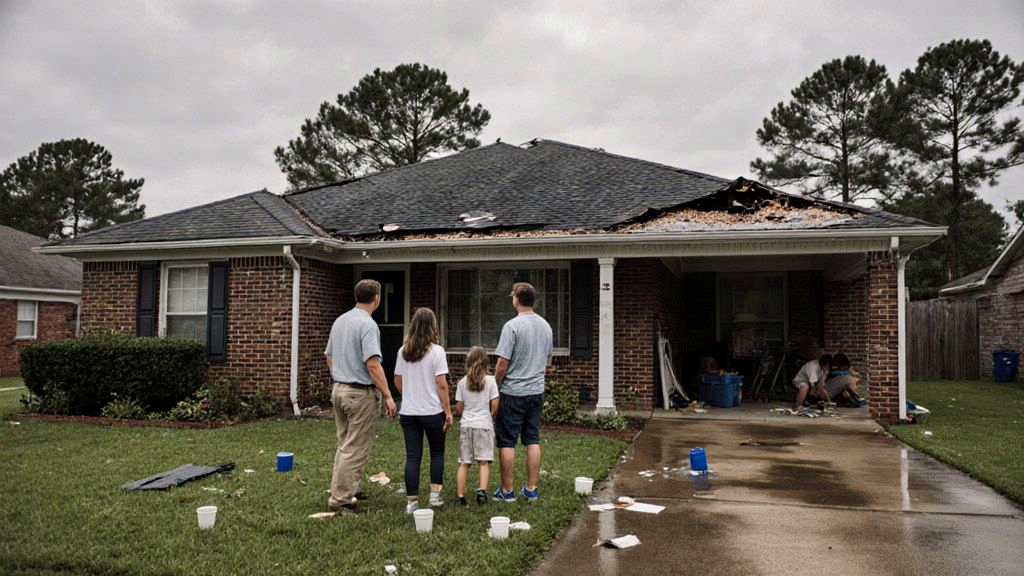
Most homeowners insurance policies, including many USAA home insurance policies, are designed to cover sudden and accidental damage from covered events, especially wind and hail damage on Mississippi roofs. If straight-line wind lifts shingles, tears seal strips, or exposes underlayment, or if hail bruises shingles, dents soft metals, damages vents, or knocks granules loose, that may support a roof damage claim. Gradual aging, long-term wear, poor maintenance, or an old roof reaching the end of its service life usually does not qualify.
A roof that is curled, brittle, leaking from long-term deterioration, or failing because it has simply reached the end of its service life is a different conversation. Insurance is not a maintenance plan. That distinction is where many USAA home insurance roofing claims are won, reduced, or denied.
ACV, RCV, and Why Roof Age Changes Everything
Two acronyms control your payout. Replacement Cost Value (RCV) pays what it actually costs today to put a new roof on, while Actual Cash Value (ACV) pays that figure minus depreciation for the years your roof has already lived. A fifteen-year-old roof on an ACV settlement can lose a large share of its value to depreciation before a dime reaches you. Many USAA policies are written as RCV, which is the better position to be in, but they usually release the money in two parts: the depreciated amount up front, and the rest, called recoverable depreciation, only after the work is finished and invoiced. Knowing which type you carry tells you what to expect in the mailbox.
The Wind and Hail Deductible Nobody Reads
Here is the line that surprises Pine Belt homeowners more than any other. In coastal and storm-prone parts of Mississippi, many policies carry a separate wind and hail or named-storm deductible, and it is frequently written as a percentage of your home’s insured value rather than a flat dollar amount. One or two percent of a three hundred thousand dollar dwelling is three thousand to six thousand dollars out of pocket, not the routine one thousand dollar deductible you might assume. Reading that single endorsement before a storm hits tells you exactly where you stand the moment damage occurs.
Filing a USAA Roof Claim After a Mississippi Storm
USAA makes the reporting step straightforward through its online claims tools, but the order still matters. The goal is to get the claim on record, document the damage before cleanup, and avoid mistakes that make the claim harder to evaluate.
For USAA’s own claim resources, homeowners can start by checking these homeowners’ insurance claim insights. Then, move through the process in this order:
Document Before You Touch Anything
Take photos from the ground before cleaning up any storm debris. Capture the full roof, missing shingles, yard debris, dented gutters, damaged vents, siding or fence damage, and any interior water stains. Write down the storm date, approximate time, what happened in your area, and whether nearby homes had similar roof damage.
File the First Notice of Loss
Report the claim through USAA’s app, website, or claims line, and have your policy number ready. Write down your claim number, filing date, representative’s name if provided, next steps from USAA, and the adjuster appointment date once it is scheduled. Do not exaggerate the damage; simply report what happened, when it happened, and what you can see.
Get a Professional Roof Assessment
Have a licensed local roofing contractor inspect the roof and document visible storm damage before the adjuster’s visit, when possible. A good assessment should include photos, measurements, material notes, and a repair or replacement estimate. That estimate helps you understand whether the insurance scope matches the actual roof condition.
For homeowners who need a local inspection after a storm, our residential roof repair services can help identify visible roof damage and explain whether repair or replacement should be considered.
Mitigate Damage and Keep Receipts
If water is actively entering the home, take reasonable steps to prevent additional damage, such as tarping the leak or making a temporary repair. Save every receipt so the cost can be documented as part of the claim. Reasonable emergency mitigation costs may be considered under your USAA home insurance policy, but avoid permanent repairs before the adjuster inspection unless USAA tells you otherwise.
One warning deserves repeating: do not let a storm-chasing crew pressure you into signing a contract the week after a major weather event. Mississippi fills up with out-of-town roofing trucks after storms. The ones knocking on doors with same-day promises are often not the ones still around when a warranty issue shows up two years later.
Why You Should Never Inspect Storm Damage Yourself

After a storm, your first instinct may be to grab a ladder and check the roof yourself. Do not do it. A wet, wind-loosened, or storm-damaged roof is dangerous because loose shingles can slide, damaged decking can give way, and wet granules or metal valleys can be slicker than they look from the ground.
There is also a claim problem: most homeowners do not know what evidence matters. You might notice a missing shingle but miss hail bruising, fractured mats, lifted nail heads, broken seal strips, creased shingles, or damaged flashing that could matter when USAA home insurance reviews the claim. A professional assessment is safer and more useful because a trained roofer can document the roof with the photos, measurements, and condition notes an adjuster expects.
For a broader breakdown of the full claim sequence, read our guide to Mississippi roof insurance claims.
Working With a Roofing Contractor on Your Claim
The best time to involve a roofing contractor is before the adjuster inspection, not after a low estimate creates confusion. A contractor can inspect the roof, document visible storm damage, prepare a repair or replacement estimate, and be present during the adjuster’s visit when allowed. That does not mean the contractor controls the claim or represents you as an insurance professional.
It means the roof gets inspected by someone who understands roofing systems. A joint inspection can help make sure the adjuster sees lifted shingles, hail impacts, bruised soft metals, damaged vents, and other roof components that may affect the scope. If USAA’s estimate misses a necessary roofing item, the contractor’s documentation may support a supplement request.
Here is the honest opinion from the field: the homeowners who struggle most are usually not the ones with the worst damage. They are the ones with the worst documentation. We have seen obvious storm damage turn into a mess because the homeowner waited too long, cleaned up before taking photos, or signed with a contractor who only cared about getting a signature.
A good roofing contractor should help with:
- Roof inspection
- Storm damage photos
- Repair or replacement estimate
- Material and code-related scope details
- Communication about roofing damage and repair costs
- Final invoices and completion documentation
A good contractor should not promise that your USAA home insurance claim will be approved. They also should not promise to cover your deductible.
We had hail damage to our roof and TopCo walked us through the claims process. When the installation day came, they replaced our roof in one day and ran magnets through our flowerbeds and yard to catch any nails left behind. It cost us little to nothing out of pocket.
Repairs Built to Survive the Next Mississippi Storm

A roof claim is not only about this storm; it is about how the roof will handle the next ten years of Mississippi weather. Homes here face hurricanes, tropical systems, hail, heavy rain, and straight-line winds, so installation quality matters as much as the insurance approval. Proper nailing patterns, manufacturer-specified fasteners, sealed starter shingles, correct flashing, drip edge, underlayment, ridge ventilation, and clean water runoff all affect how the roof performs after the crew leaves.
Small installation shortcuts create big problems later. A nail placed too high can weaken wind resistance, poor flashing can let wind-driven rain creep behind siding or shingles, and bad ventilation can shorten shingle life during Mississippi summers. If your USAA home insurance claim results in an approved repair or replacement, do not settle for the fastest roof; make sure the work is built to handle the next storm season.
Denials, Disputes, and the Rate-Increase Worry
A denied or reduced roof claim is frustrating, but it is not always the end of the process.
USAA may deny or limit a claim for reasons such as:
- Wear and tear
- Old damage
- Poor maintenance
- Lack of storm-created damage
- Policy exclusions
- Insufficient documentation
- A repair scope instead of a replacement
Start with the denial letter or coverage explanation and read the exact reason USAA gave for the decision. Compare that reason against your roof photos, contractor estimate, storm date, and USAA home insurance policy terms. If the issue is missing documentation or a low repair estimate, your contractor may be able to provide additional photos, measurements, scope details, or a documented supplement request.
If you believe a claim is being mishandled, you can contact the Mississippi Insurance Department. The rate-increase question is also worth addressing honestly.
Any insurance claim can become part of your claim history, and premiums are affected by many factors, but a documented weather claim from a neighborhood-wide storm is different from repeated claims caused by neglect or preventable damage. Do not file a weak claim or ignore legitimate wind and hail damage; if real roof damage occurred, using your USAA home insurance is exactly why the policy exists.
The Bottom Line for USAA Policyholders
A roof claim feels overwhelming, but the process comes down to a few smart decisions. Understand your USAA home insurance coverage before the storm, including whether your roof is covered at RCV or ACV. Read your actual wind, hail, hurricane, or named-storm deductible so there are no expensive surprises later.
Document the damage before cleanup, get a licensed local contractor to inspect the roof, and make sure every repair or replacement item is supported by photos, measurements, and a clear scope. That will not guarantee approval, and no honest roofer should promise that. But it gives your claim the best chance of being reviewed on facts instead of guesswork.