

Modern Roofing Construction: A Complete Guide to Proven Techniques and Smart Materials
A roof is not just shingles nailed over plywood. Modern roofing construction is a system of framing, underlayment, ventilation, flashing, drainage, safety planning, and material selection that determines how well your home handles heat, wind, rain, and storm damage.
For Mississippi homeowners, that matters. A roof that looks fine from the curb can still fail early if the deck is soft, the ventilation is wrong, the underlayment is cheap, or the crew rushes the details nobody sees from the ground.
At TopCo Roofs, we install and replace roofs across Southern Mississippi, and one thing is obvious after seeing enough homes: the best roofs are not built by accident. They come from better planning, better materials, and crews that understand how every layer works together.
From Hand-Cut Rafters to Engineered Trusses

For most of the last century, roofing construction depended heavily on field carpentry. A skilled carpenter measured the span, calculated the pitch, cut one rafter as a pattern, and repeated it across the roof. Done well, it worked; done poorly, small errors spread across the whole structure.
Modern roofing construction often uses engineered trusses instead. A truss combines the rafter and ceiling joist into a strong triangular frame, built with strength-graded lumber and metal connector plates. Because trusses are made in a controlled setting, each one is designed to match the roof plan more consistently.
That still does not make installation automatic. Trusses must be set plumb, spaced correctly, and braced with both continuous and diagonal bracing to handle wind and load. A crew that takes bracing seriously is usually building the whole roof properly, not just rushing to the visible layers.
Key takeaway: engineered trusses improve consistency, but they still need disciplined installation. Factory-built components do not fix sloppy fieldwork.Whole Roofs Built on the Ground, Set by Crane
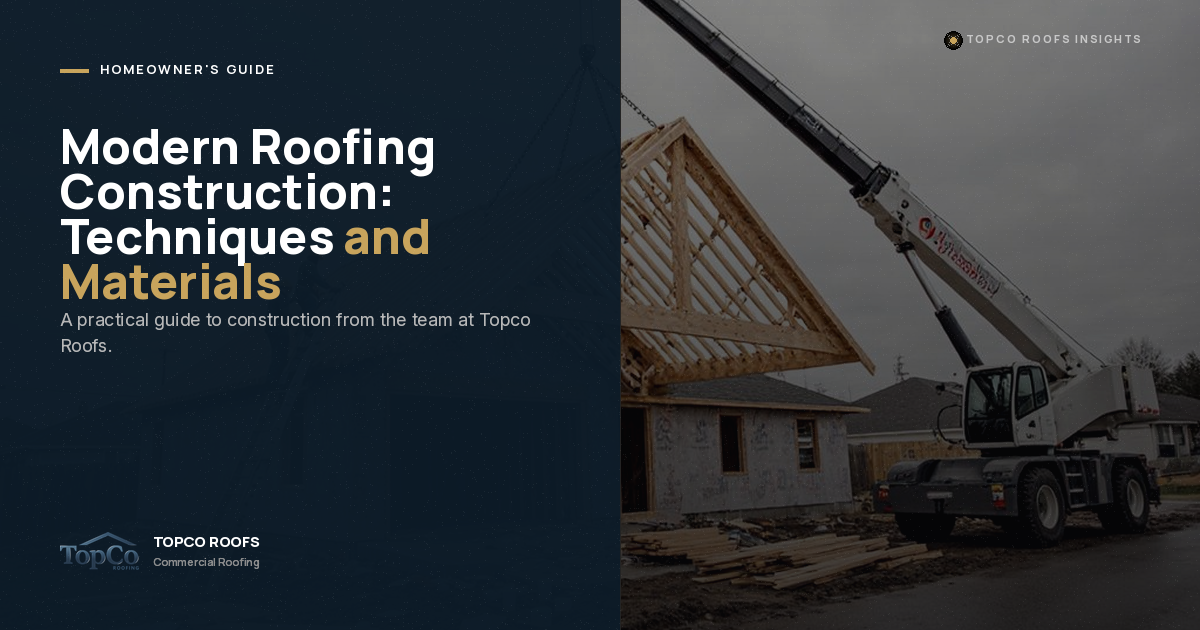
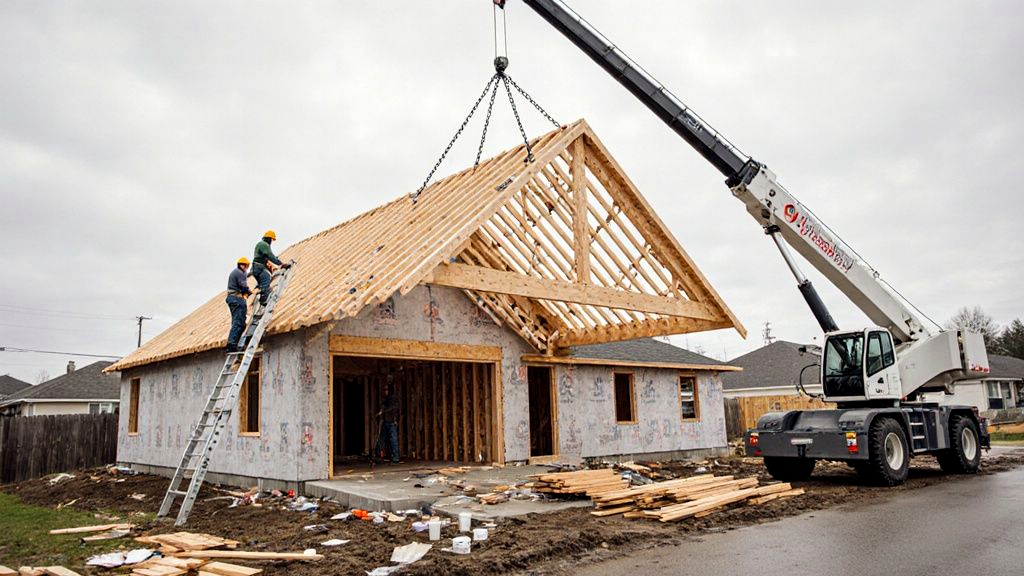
One modern roofing construction technique is assembling large roof sections on the ground and lifting them into place with a crane. Most homeowners will not see this on a standard roof replacement. It is more common on larger developments, new construction projects, or designs where ground assembly makes the work safer and faster.
The advantage is simple: crews can do more heavy work from the ground instead of from ladders or roof edges. They can brace sections, install gable components, check alignment, and prepare the assembly from a safer position. Once ready, the crane sets the roof section onto the prepared wall plates.
For most Mississippi homeowners, the real lesson is not the crane itself. It is the planning behind good roofing construction. Materials should be staged before tear-off, decking issues should be identified early, flashing details should be reviewed before shingles go down, and ventilation should be treated as part of the roof system.
That same planning mindset is what we bring to every residential roof installation project. The more decisions that are made before the crew starts tearing into the roof, the cleaner the installation usually goes.
Smart Materials That Outlast the Old Standards
Techniques are only half of modern construction. The materials going onto roofs today are a generation ahead of what most existing Mississippi roofs were built with.
Architectural and impact-rated shingles
The thin three-tab shingle that dominated for decades has largely given way to laminated architectural shingles, which are thicker, heavier, and rated for much higher wind speeds. Class 4 impact-rated shingles add a rubberized mat that resists hail strikes, a meaningful upgrade in our storm-prone state. If you are weighing options, our shingle material comparison guide breaks down the choices in detail.
Synthetic underlayment
Beneath the shingles, woven synthetic underlayment has replaced traditional felt paper on quality jobs. It resists tearing, grips boots better on a pitched deck, and keeps the house dry for weeks if weather interrupts the schedule, instead of the days that felt could manage.
Insulated structural panels
On homes designed with living space under the roof, builders increasingly use panels that bond rigid foam insulation between structural skins. The roof arrives as a set of cassettes that provide structure, weatherproofing, and most of the required insulation in one component. It is a clever answer to an old problem: a roof that is also a wall and a ceiling.
Commercial membranes
Flat and low-slope buildings have their own material revolution in single-ply membranes like TPO, EPDM, and PVC, which are heat-welded or adhered into a continuous waterproof sheet. We install these commercial roofing construction systems on churches, medical offices, and warehouses across Mississippi, and the engineering behind them is completely different from residential work.
Energy Efficiency Is Now Part of the Roofing Construction Plan
An older roof had one job: keep water out. A modern roof is also expected to manage heat, and in a Mississippi summer that is no small assignment.
Reflective shingle granules and light-coloured membranes redirect more solar energy before it is absorbed by the building. According to the U.S. Environmental Protection Agency’s cool roof guidance, conventional roofs can become substantially hotter than the surrounding air, while reflective roofing stays cooler and reduces heat transfer into the building. This can lower air-conditioning demand and help reduce cooling costs.
Ventilation has become a designed system rather than an afterthought. Balanced intake at the soffits and exhaust at the ridge keeps air moving under the deck, pulling heat and moisture out of the attic. Radiant barriers stapled beneath the rafters reflect heat before it reaches your insulation. None of these pieces is exotic on its own, but a contractor who plans them together during construction delivers a roof that performs better every day for decades.
Safety and Quality Control on a Modern Job Site
The way a crew works tells you almost everything about the roof they are building. Roofing is dangerous, so a serious crew plans for fall protection, safe ladder placement, eye protection, gloves, clean tear-off, controlled debris removal, and smart material staging before the job starts. OSHA requires fall protection for residential construction workers at 6 feet or more above lower levels.
One jobsite detail homeowners should watch is where the shingle bundles are placed. Shingle bundles are heavy, and a careless crew can overload one section by stacking too much weight in one spot. A disciplined crew spreads materials across the roof and balances the load instead of dumping bundles wherever it is convenient.

That small detail says a lot about the rest of the work. Crews that respect material staging usually respect nail placement, flashing transitions, ventilation cuts, underlayment overlaps, and cleanup too. A roof is not done when it looks done; it is done when vents, pipe boots, valleys, drip edge, flashing, and leftover nails have all been checked.
What Modern Construction Means for Your Next Roof
You do not need to become a roofing expert before replacing your roof. But you do need to ask the questions that separate a serious contractor from a weak one. Ask what underlayment is included, how ventilation will be balanced, whether damaged decking will be replaced, and how flashing will be handled around walls, chimneys, vents, and valleys.
Vague answers are a warning sign. Licensing matters too, especially in Mississippi, where contractors and roofers must meet state requirements through the Mississippi State Board of Contractors. Always verify that your contractor is properly licensed and insured before signing anything, because a cheap roof from an unqualified crew can become expensive fast.
The good news is that a well-planned roof replacement does not have to drag on for days. With the right materials, crew size, prep work, and weather window, many residential roofs can be replaced efficiently with minimal disruption. Modern roofing construction makes that possible by combining stronger materials, better planning, cleaner installation methods, and smarter ventilation into one roof system.