


Hail Damage Roofers: An Expert Assessment Guide for Mississippi Homeowners
After a Mississippi hailstorm, finding hail damage roofers is easy; finding honest ones is the real challenge. Good roofers do not lead with pressure or promises; they inspect the storm date, impact areas, bruising, shingle condition, and whether the damage is strong enough to justify a claim. If your roof is fine, they should say so, even if it costs them the job, because filing a weak claim can create more stress than value.
I have seen homeowners get overwhelmed by this exact moment. A truck shows up, someone points at a few granules in the gutter, and suddenly the homeowner feels pressured to sign before they even understand what happened. That is backwards. Honest hail damage roofers slow the process down, document what is actually there, and help you make a decision based on facts instead of fear.
This guide explains how a real assessment works, what a roofer should document, how the adjuster meeting should be handled, and which red flags should make you shut the door before the conversation goes any further.
How Hail Actually Hurts Your Roof (And Why It Hides From the Ground)

Hail damage is tricky because the worst problems are not always visible from the driveway. A roof can look fine after a storm but still have bruised shingles, weakened matting, and impact marks that shorten its lifespan.
Hail Damage Usually Starts Small
Most homeowners expect obvious signs like holes, shredded shingles, or water dripping through the ceiling. By the time those problems appear, the damage may have already moved from a roofing issue to an interior leak.
In many cases, hail damage starts with smaller warning signs. These can include bruised shingles, broken mat fibers, missing granules, dented roof metals, and weak spots that age faster under Mississippi heat.
What Hail Damage Roofers Look For First
The first thing hail damage roofers look for is a soft circular bruise on the shingle. When hail hits asphalt roofing, it can crush the mat underneath without ripping the surface open.
That damaged area may feel softer than the surrounding shingle when pressed by hand. Roofers also look for circular granule loss, fractured matting, and impact patterns that separate real hail damage from normal wear.
Why Granule Loss Matters
Granules protect asphalt shingles from sun exposure, heat, and weather. When hail knocks those granules loose in a circular pattern, the exposed area can age faster than the rest of the roof.
This does not always cause an immediate leak, but it can reduce the life of the shingle. That is why hail damage should be documented early instead of ignored until water stains show up inside the home.
Why Storm Size Alone Does Not Tell the Whole Story
A loud storm is not always a damaging storm. The National Weather Service uses hail of one inch or larger as part of its severe thunderstorm criteria, but that does not mean every one-inch hail report automatically creates a valid roof claim.
Roof age, shingle type, slope, wind direction, storm duration, and impact angle all matter. That is why careful hail damage roofers tie the inspection to a specific storm date instead of guessing from the ground.
For stronger documentation, homeowners and contractors can also check the NOAA Storm Events Database to confirm reported hail events by state, county, date, and event type. That source should support the inspection file, not replace it. A database report may prove a storm happened nearby, but the roof still has to show claim-worthy damage.
What Good Hail Damage Roofers Document That You Would Miss
An insurance adjuster’s job is to verify a claim, not build one from scratch. If the documentation is weak, the claim starts weak too. Strong documentation changes the conversation from “maybe there is damage” to “here is the damage, here is where it is, and here is why it matters.”
Good hail damage roofers inspect the roof slope by slope instead of making broad guesses from the ground. They document visible damage, connect photos to the correct roof areas, and gather the kind of evidence an adjuster can actually review.
A thorough roof inspection should include:
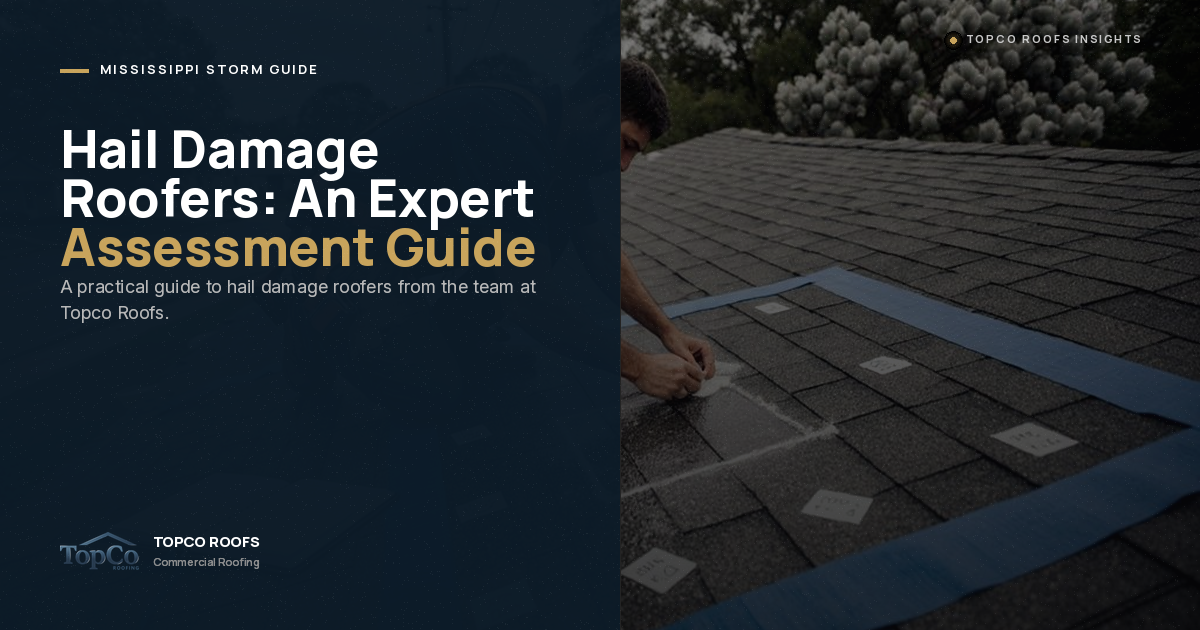
- Chalking visible hail strikes on each affected slope
- Taking clear photos of bruising, granule loss, and impact marks
- Measuring damaged areas when needed
- Using test squares, often 10 by 10 feet, to show strike density
- Matching photos to the correct roof slope or section
- Checking gutters, downspouts, vents, flashing, screens, fascia, ridge caps, and HVAC fins for collateral damage
Collateral damage matters because metal surfaces and exterior accessories can show fresh hail impacts more clearly than shingles. If those marks follow the same storm pattern as the roof damage, they help support the overall findings.
This is where many homeowners get burned. They assume every roofer documents the same way, but they do not. Average roofers may take a few phone photos and call it enough, while serious hail damage roofers build a complete file that the homeowner, adjuster, and insurance carrier can understand.
The Adjuster Meeting: Where Most Mississippi Claims Are Won or Lost
The adjuster meeting is where experienced hail damage roofers earn their keep. The goal is not to argue with the adjuster or promise a result the roofer cannot legally control. The goal is to make sure both professionals are looking at the same slopes, the same test squares, the same collateral damage, and the same storm context.
A roofer should meet the adjuster on-site, walk through the documented findings, and point out items that may be missed from the ground. They can discuss roof condition, visible damage, repair feasibility, replacement scope, and the documentation already collected. They should not promise coverage, interpret the policy like an attorney, or pressure the homeowner into signing before the claim details are clear.
Our existing storm-damage messaging already fits this approach: inspect first, document carefully, and walk the homeowner through the process. That is the right angle. One recent Mississippi homeowner described that exact experience: We documented the hail damage, the adjuster verified what was found, and the replacement moved forward smoothly. That kind of result is not luck. It comes from evidence, timing, and hail damage roofers who understand the inspection process before the claim gets messy.
If storm damage created an active leak or exposed part of the roof, homeowners should also know we offer emergency roof repair in Southern Mississippi. Emergency repair and claim documentation are different jobs, but they often happen in the same stressful week.
Repair, Patch, or Full Replacement: How We Make That Call
Not every storm calls for a new roof. The carrier pays based on the cost to return your roof to pre-loss condition, and that depends on strike density per slope, the age and brittleness of the existing shingles, whether matching replacements are still manufactured, and what your Mississippi roof insurance claim covers under your specific policy.
If one slope has heavy strikes and the other three are clean, a partial replacement is on the table. If the shingles are 18 years old and brittle, that same partial may not be real because new shingles will not blend or seal with the aged ones. If your policy has a matching clause and the original shingle has been discontinued (which happens often with anything older than about ten years), the carrier may owe you a full roof even on relatively light damage. None of that gets surfaced unless your roofer is reading your policy alongside the damage report.
How We Walk You Through the Decision
Slope-by-slope strike count
We pull the chalk numbers from each test square and compare against the carrier threshold. If three of four slopes are below the threshold, you are looking at a partial. If two or more cross it, you are usually looking at full.
Shingle age and brittleness
An 8-year-old shingle bends; a 20-year-old shingle snaps. We test a couple of field samples by hand. Brittle shingles disqualify partial repairs because the new course will not seal to a fragile existing course.
Match availability
We check the manufacturer’s current product line for your original shingle. If it has been discontinued (or even reformulated), a matching clause in your policy can push the claim from partial to full.
Underlayment and decking inspection
Once shingles are off, what is underneath matters. Soft decking, exposed nail pops, and brittle felt can change the scope from a “lay over” to a full tear-off, and that adjustment is normally a supplement claim the adjuster will honor if it is documented during the project.
How to Vet Hail Damage Roofers After a Storm: The Red Flags That Should End the Conversation
Most bad roofing stories start the same way: a contractor shows up right after a storm, promises a “free roof,” and pressures the homeowner to sign before the damage has been properly inspected. That is not how legitimate hail damage roofers should operate. A trustworthy roofer should slow the process down, explain what they found, and give you enough documentation to make a smart decision.
When comparing contractors, look for signs that they are local, qualified, and willing to back up their inspection with real evidence. Reliable hail damage roofers should be able to provide:
- A local Mississippi presence
- Proof of licensing and insurance
- Clear photos of roof damage
- Slope-by-slope inspection notes
- Test square documentation when needed
- Photos of collateral damage, such as gutters, vents, flashing, screens, fascia, ridge caps, or HVAC fins
- A realistic explanation of whether the roof needs repair, replacement, or no claim at all
You should also know which red flags are serious enough to end the conversation. Avoid any contractor who promises insurance approval, offers to waive or pay your deductible, pressures you to sign immediately, or uses one blurry phone photo as proof of roof damage. Also be cautious of anyone who refuses to climb the roof when conditions are safe, skips slope-by-slope documentation, or will not meet the adjuster.
The contract matters too, so be careful with paperwork that locks you in before the adjuster inspects the roof or before you understand the approved scope. A solid contractor gives you room to ask questions, while storm chasers rush because speed is their leverage. The best roofers will tell you no when there is no claim-worthy damage, because protecting you from a bad claim is more valuable than telling every homeowner what they want to hear.
The Quiet Difference an Honest Crew Makes
Hail damage roofers really have two jobs. The first is technical: finding the damage, documenting it, and separating real hail bruising from normal roof aging. The second is practical: helping the homeowner understand what the documentation means before they make a decision.
The best hail damage roofers are not the ones who promise every homeowner a new roof. They are the ones who can tell you, plainly, whether your roof has claim-worthy damage or whether you are better off leaving insurance out of it. That kind of honesty is not flashy, but it is exactly what protects Mississippi homeowners after a storm.
If you already have an estimate and are worried about the gap between the approved insurance scope and the actual roof work needed, review TopCo’s No Roof Left Behind Programand ask the team to explain the options clearly. Keep the conversation grounded in documentation, approved scope, financing terms, and policy responsibilities.