

Best Construction Knife for Roofing Projects: A Roofer’s 2026 Guide to Safer, Cleaner Shingle Cuts
A construction knife may look simple, but it is one of the most-used tools on a shingle roofing job. Roofers rely on it to trim asphalt shingles, cut underlayment, shape ridge cap, open material packaging, and make clean detail cuts around hips, valleys, vents, and roof edges.
The right construction knife helps a crew work more cleanly and safely. The wrong tool can leave rough cuts, waste material, slow the job down, and increase the chance of hand injuries. At TopCo Roofing, our crews work in Mississippi heat, humidity, and tough job-site conditions, so a knife must stay sharp, feel secure, and withstand asphalt granules, dust, sweat, and daily use.
This guide explains how roofers choose the right construction knife, which blade styles work best for common roofing materials, and what homeowners should know when watching a professional crew at work.
Why the Right Construction Knife Matters
Roofing requires repeated cuts through tough, abrasive materials. Asphalt shingles are made with a fiberglass mat, asphalt coating, and protective granules. Those granules wear down blades quickly. When a blade gets dull, the roofer has to push harder, which can lead to slips, rough cuts, damaged materials, and unnecessary risk.
A sharp, well-controlled construction knife helps in three practical ways.
Cleaner Cuts
A sharp blade slices through shingles and underlayment instead of tearing them. Clean cuts matter most at valleys, ridges, rake edges, and roof penetrations where sloppy trimming can stand out or affect how materials lay. That same attention to detail is important during a full residential roof installation, where every cut, fastener, and shingle placement affects the finished roof.
Safer Handling
Most knife injuries happen when workers force a dull blade, cut toward the body, leave the blade exposed, or dispose of used blades carelessly. A good roofing knife should give the roofer control, retract or fold safely when not in use, and make blade changes simple.
For broader jobsite guidance, OSHA’s hand and power tools safety resources explain why tools must be used and maintained properly to reduce workplace hazards.
Better Jobsite Efficiency
A roofer may reach for a construction knife dozens of times in a day. When the tool is comfortable, sharp, and matched to the material, the work goes more smoothly. Over the course of a full roofing project, those small improvements add up.
Common Construction Knife Types Used in Roofing
Most professional roofers use more than one knife because different cuts require different blades and handles. These are the main options used on residential roofing jobs.

1. Standard Retractable Utility Knife
This classic utility knife typically features a standard trapezoidal blade and allows the user to extend or retract it manually. It is useful for general jobsite cutting, opening bundles, trimming packaging, and making basic straight cuts.
The main downside is that the blade must be retracted by hand. If it is left open, it can cut hands, damage tool pouches, or create a hazard on a sloped roof.
Best for: general roofing cuts, packaging, light trimming, and as a backup.
2. Self-Retracting Safety Knife
A self-retracting safety knife pulls the blade back into the handle when the slider is released. This makes it useful for repetitive cutting tasks, especially when workers are constantly picking up and setting down the tool.
Not every retractable knife is self-retracting. Some require the user to manually slide the blade closed. For roofing work, the best choice depends on the task. A self-retracting model can improve safety, but it still needs enough blade exposure and control for the material being cut.
Best for: packaging, underlayment, material handling, and jobsites with stricter safety requirements.
3. Hook-Blade Roofing Knife
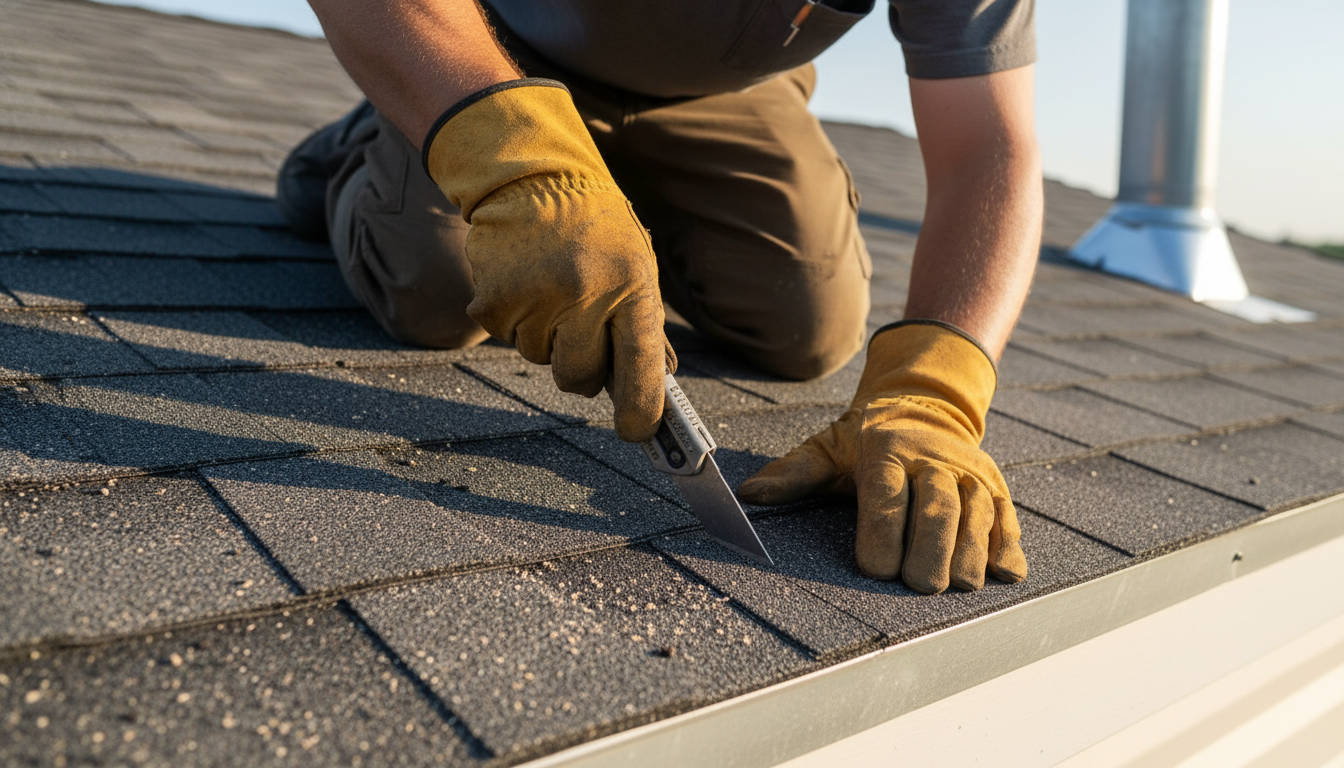
A hook blade has a curved cutting edge that pulls through the back side of shingles and roofing materials. This blade style is especially useful for asphalt shingles because it cuts cleanly without digging as aggressively into the surface beneath the shingles.
For shingle work, hook blades are often better than standard pointed utility blades. They help roofers make controlled pull cuts and reduce the chance of gouging underlayment or nearby materials.
Best for: asphalt shingles, starter strips, ridge cap, and controlled pull cuts.
4. Snap-Blade Knife
Snap-blade knives use long, segmented blades. When the tip becomes dull, the user snaps off the worn section to expose a fresh edge.
These knives are helpful for cutting rolled materials, foam insulation, synthetic underlayment, and packaging. However, the longer blade can flex, which makes it less ideal for heavy shingle cutting.
Best for: foam, rolled materials, membranes, and light-duty trimming.
5. Folding Utility Knife
A folding utility knife works like a pocket knife but uses replaceable utility blades. It clips easily onto a pocket or tool belt and is convenient for quick cuts.
It is not typically the primary knife for roofing installations, but it is useful for estimators, foremen, repair technicians, and crew members who need a compact tool for small tasks.
Best for: inspections, small repairs, opening packaging, and quick jobsite cuts.
Roofing Blade Types and When to Use Them
The handle matters, but the blade does most of the work. Choosing the right blade shape helps roofers cut more cleanly and work with better control.
Two practical tips. First, change blades far more often than you think. Roofing material dulls steel fast, and a fresh edge takes one finger of pressure where a dull edge takes four. Second, never throw used blades loose in a trash bag. Use a small magnet box or the slot in the handle base, and dispose of them in a sealed container so the next person who handles the bag does not get sliced.
Practical Blade Safety Tips
A construction knife is safe only when used correctly. Roofing crews should follow simple habits every day:
- Change blades before they become dull.
- Cut away from the body whenever possible.
- Retract, fold, or guard the blade when the knife is not in use.
- Never leave an open knife lying loose on a roof slope.
- Do not throw loose, used blades into trash bags.
- Store old blades in a sealed blade container or a safe disposal box.
- Replace any knife with a loose blade, damaged lock, or unreliable slider.
A construction knife should always be treated as an active cutting tool, even when the blade looks short. A dull blade is more dangerous than many people realize. It takes more force, gives the user less control, and is more likely to slip.
What Makes a Good Roofing Knife Handle?
Roofing work is physically demanding. A knife handle must be easy to grip, even when the roof is hot, dusty, or humid. Three-handle features matter most.
Secure Grip
Smooth handles can become slippery when hands are sweaty or dusty. A textured metal grip, rubber overmold, or well-shaped handle gives the roofer better control.
Strong Blade Lock
The blade should not wiggle during a cut. If the blade lock feels loose or unreliable, the knife should be replaced.
Easy Blade Changes
Roofing materials dull blades quickly. A good construction knife should make it easy to swap blades without wasting time or creating a safety hazard.
Some roofers also prefer a lanyard hole, especially when working around ladders, edges, or steep slopes. A tethered tool is less likely to fall and damage property below.
The Best Knife Setup for Most Residential Roofing Jobs
For most residential asphalt shingle projects, a practical setup includes:
- A quick-change utility knife with hook blades for shingles, starter strips, and ridge cap.
- A standard utility knife with trapezoid blades for general jobsite cutting and packaging.
- A snap-blade knife for foam, membranes, rolled goods, and light trimming.
- A safe container for disposing of used blades.
No single construction knife is perfect for every roofing task. Professional crews use the right tool for the cut, rather than forcing a single blade to do everything. On larger projects, this same tool discipline supports cleaner work during a residential roof replacement, especially when old materials are removed and new shingles are installed in stages.
Picking the Right Construction Knife for Your Project
Homeowners do not need to inspect every tool in a roofer’s pouch, but good tools and safe habits say a lot about a crew. A professional roofing contractor should work with sharp blades, make controlled cuts, follow safe disposal practices, and perform clean detail work.
The knife itself is not the expensive part of a roof. The real value comes from the crew’s training, workmanship, material knowledge, and attention to detail. Small choices, like using the right construction knife for a clean shingle cut, are part of a larger system that leads to a better roof.
At TopCo Roofing, attention to detail matters on every residential roofing project. From inspection to installation, our crews focus on doing the job cleanly, safely, and correctly.