

Approximate Home Insurance Cost: How Your Roof Drives the Premium
Most homeowners blame inflation when their renewal letter goes up, but in Mississippi, your roof may be one of the biggest reasons your approximate home insurance cost changes. Insurance carriers study roof age, material, slope, condition, storm exposure, and documentation because they want to know how likely the roof is to leak, fail, or trigger a claim. After years around Mississippi roof inspections and insurance repairs, one thing is clear: homeowners who understand and document their roof are usually in a stronger position than those who wait to be surprised by renewal season.
This guide breaks down how roofing affects your approximate home insurance cost, which factors matter most, and what to do before your next policy renewal.
What a Home Insurance Premium Really Includes
A homeowner’s policy is not one simple line item. It is made up of several coverage parts, and the roof usually affects the dwelling portion the most because it protects the structure itself. Since the roof is one of the largest exterior components insurers may eventually have to replace, carriers pay close attention to its age, condition, material, and storm risk.
The main parts of a homeowners policy usually include:
- Dwelling coverage: protects the main structure of the home.
- Other structures: covers detached garages, sheds, fences, or similar structures.
- Personal property: covers belongings inside the home.
- Loss of use: helps with temporary living costs if the home becomes unlivable after a covered loss.
- Liability coverage: protects against certain injury or property damage claims.
- Medical payments to others: helps cover small injury-related expenses for guests.
Underwriters price your premium based on how likely your roof is to cause a claim and how costly that claim could be. A newer roof usually looks low risk, while an older roof with curling shingles or missing granules can raise concerns. In Mississippi and Alabama Gulf counties, roofing decisions can affect both your base premium and your wind or hail deductible.
Roof Age and Your Approximate Home Insurance Cost
Roof age is one of the first details insurance carriers review because it helps them estimate how likely the roof is to fail, leak, or trigger a claim. The older the roof gets, especially after year 15, the more likely it is to affect coverage options and your approximate home insurance cost.
| Roof Age | How Carriers Usually View It | Possible Insurance Impact | What Homeowners Should Do |
|---|---|---|---|
| 0–8 years | Usually treated as a lower-risk roof, especially if it was installed correctly and has no visible storm damage. | Premium impact is usually minimal, and coverage is more likely to stay under Replacement Cost Value, depending on the policy. | Keep permits, warranties, installation photos, and material documentation in one place. |
| 9–14 years | Carriers may start watching the roof more closely, but it is not automatically a major concern if condition is good. | Small premium increases may appear, especially in storm-prone areas like Mississippi and the Gulf Coast. | Schedule an inspection before renewal and document the roof’s condition while it still has a stronger insurance profile. |
| 15–19 years | This is where scrutiny increases. Some carriers may question remaining roof life or begin shifting toward Actual Cash Value coverage. | Your approximate home insurance cost may climb faster, and a storm claim may result in more out-of-pocket expense because of depreciation. | Get a professional roof inspection, repair visible issues, and ask your agent how roof age affects your current coverage. |
| 20+ years | Often treated as a high-risk roof, especially if it is asphalt and showing wear such as granule loss, curling, lifted shingles, or old patchwork. | Carriers may limit coverage, raise premiums, require repairs, or refuse to write a new policy. | Start planning replacement before the carrier forces the issue. Waiting too long can leave you with fewer and more expensive options. |
| 13–14 years specifically | This is the warning window. The roof may still be insurable on good terms, but it is approaching the age where underwriting gets tougher. | A lack of documentation can hurt you once the roof crosses into the 15-year range. | Do not wait for renewal season. Get the roof inspected, save the report, and correct small problems early. |
How Carriers Verify Roof Age Without Asking You
Insurance companies no longer rely only on a homeowner’s estimate of roof age. Carriers can check permit records, aerial images, property databases, claim history, and third-party roof reports to verify the condition and age of the roof.
Some insurers also use aerial photos and software tools to flag roof deterioration before anyone visits the property. Those tools can catch real damage, but they can also misread shadows, stains, tree debris, or outdated images, which is why a professional roof inspection with photos, material details, visible damage notes, and remaining service life can help protect your approximate home insurance cost from being based on bad assumptions.
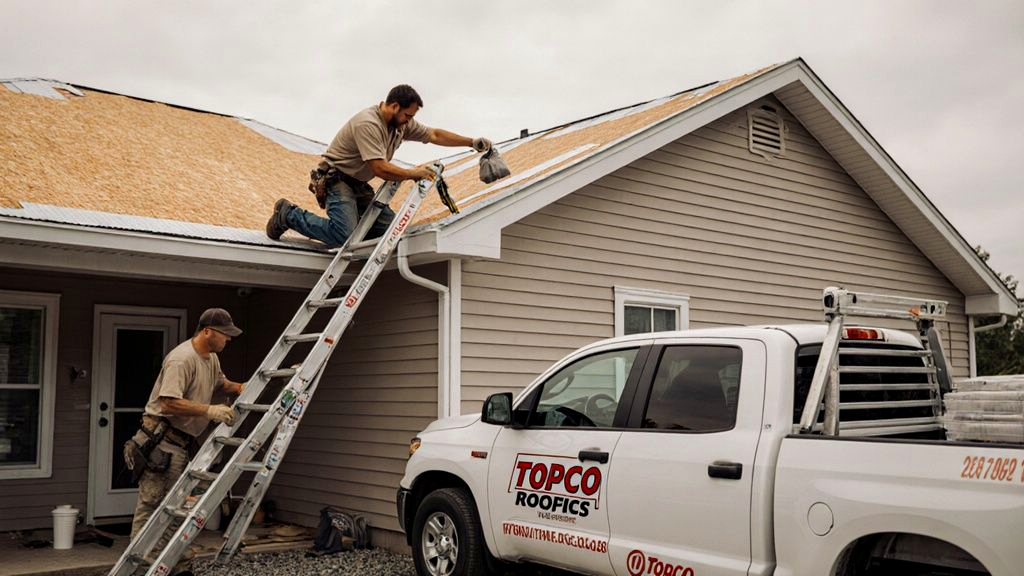
Topco offers roof inspections and repair support for Mississippi homeowners dealing with roof concerns, storm damage, and insurance questions. If your roof has visible damage or an active leak, their residential roof repair service is the more relevant next step than waiting for the next renewal notice.
Roofing Material Matters More Than Most Homeowners Realize
Not all roofing materials are viewed the same by insurance carriers. Three-tab asphalt shingles, architectural shingles, impact-resistant shingles, metal roofing, tile, and synthetic products each come with different levels of wind resistance, durability, repair complexity, and long-term risk.
Three-tab shingles may cost less upfront, but they often perform worse in wind and wear out faster than stronger systems. Architectural and impact-resistant shingles can create a better insurance profile, especially in storm-prone areas, while metal roofs can be strong performers if they are installed correctly. Cheap roofing is not always cheap long term, because weak materials, poor installation, and frequent repairs can all affect your approximate home insurance cost over time.
If replacement is already on the table, it is worth comparing material options through both a roofing lens and an insurance lens. Topco’s residential roof replacement service is a relevant internal resource here because replacement decisions should account for storm performance, insurance documentation, and long-term cost, not just shingle color.
Slope, Pitch, and Wind Resistance
Roof pitch affects drainage, wind pressure, and repair cost. Low-slope roofs can carry a higher leak risk if they are not built with the right system, while very steep roofs can cost more to repair because labor is harder and safety requirements increase. Strong fastening, sealed roof decks, better edge metal, and hurricane-resistant details help reduce storm vulnerability, especially in coastal and high-wind areas.
Programs like FORTIFIED Home by the Insurance Institute for Business & Home Safety exist because roof strength is measurable. The FORTIFIED standard focuses on better protection against wind, rain, and severe weather. For homeowners in storm-prone states, that kind of documentation can support a better insurance conversation.
This does not mean every FORTIFIED roof automatically produces the same discount with every carrier. That would be a sloppy promise. But it does mean a stronger, better-documented roof can help lower risk, and lower risk is one of the few legitimate ways to influence your approximate home insurance cost.
Condition, Maintenance, and Documentation
Two roofs can be the same age and still be treated differently. A 12-year-old roof with clean valleys, intact ridge caps, good flashing, and no visible storm damage is not the same risk as a 12-year-old roof with exposed nails, lifted shingles, clogged gutters, and cracked sealant.
Maintenance matters because insurance companies look for signs of neglect. Missing shingles, tarps left on the roof, moss growth, ponding water, sagging decking, and old patch jobs can all raise red flags. Once the roof looks neglected, the carrier may see the home as a higher-risk property.
Here is the part homeowners often get wrong: they think the insurance company needs to prove the roof is failing. In reality, the company only needs enough concern to price the risk differently or ask for repairs.
Documentation is your defense. Photos, inspection reports, invoices, permits, material warranties, and repair records can all help show that the roof is being maintained. Without that paper trail, your approximate home insurance cost may reflect the carrier’s worst-case assumption.

How Roof Replacement Can Change the Insurance Conversation
Replacing an aging roof does more than stop leaks; it can change how the insurance company views the entire property. A new roof may improve coverage options, reduce underwriting concerns, strengthen storm resistance, and affect your approximate home insurance cost, but the actual savings depend on the home, carrier, policy, location, and roofing system. To get credit for the upgrade, document the roof during installation with permits, material specs, warranty details, mitigation forms, and photos of the underlayment, decking, edge metal, flashing, and finished work.
If cost is the obstacle, our No Roof Left Behind Program may be useful for homeowners who need replacement options, insurance support, or financing paths instead of letting an aging roof become a bigger financial problem.
What to Do Before Your Next Renewal
Do not wait until the renewal notice arrives, because by then you are reacting instead of planning. Start by confirming the exact installation date of your current roof through county permit records, old invoices, home purchase documents, or warranty paperwork. If you cannot verify the date, schedule a roof age inspection so you are not relying on a rough guess.
If your roof is over 10 years old, get a professional inspection before renewal season. This matters even more if your home is in a storm-prone part of Mississippi or your premium has increased without a clear explanation. A clean report can help defend the roof’s condition, while a bad report gives you time to plan repairs or replacement before the carrier forces the issue.
To stay ahead, focus on these steps:
Confirm the Roof Installation Date
Use permits, invoices, purchase documents, or warranty records to confirm when the roof was installed.
Schedule a Professional Inspection
Get the roof inspected if it is over 10 years old or if the premium has jumped unexpectedly.
Ask Your Agent to Quote Roof Scenarios
Compare standard architectural shingles, impact-resistant shingles, and wind-mitigation options.
Compare the Numbers
Compare the options against your actual approximate home insurance cost so your decision is based on real policy impact, not generic advice.
Save Every Document
Keep permits, invoices, inspection reports, warranties, photos, and repair records in one place.
The goal is simple: have proof ready before the insurance company asks for it. Homeowners with documentation usually have a stronger position than homeowners trying to explain everything after the renewal notice lands.
Common Roof Problems That Can Raise Insurance Concerns
Some roof problems are easy to spot from the ground, but others stay hidden until a proper inspection catches them. The issue is not just whether the roof looks bad; it is whether the roof gives an insurance carrier a reason to question maintenance, durability, or future claim risk.
Missing or Damaged Shingles
Missing shingles are one of the clearest warning signs because they leave the roof system exposed to water intrusion. Curling shingles can point to age, heat damage, poor ventilation, or material failure. Granule loss is another red flag because it means the shingles are wearing down and losing the protective surface that helps them resist sun and storm damage.
Flashing and Leak-Prone Areas
Cracked flashing around chimneys, vents, skylights, and wall transitions can cause leaks even when the shingles still look fine. These areas are common failure points because they depend on proper sealing, clean installation, and regular maintenance. Ignoring flashing problems is a bad bet because water usually finds the weak spot before the homeowner does.
Clogged Gutters and Drainage Issues
Clogged gutters can create more trouble than most homeowners realize. When water cannot drain correctly, it can back up into fascia, soffits, roof decking, walls, and even interior spaces. From an insurance perspective, poor drainage may look like neglect, and that can affect how the carrier views the property.
Old or Poor Storm Repairs
Old storm repairs can raise questions if they were done poorly or never documented. Mismatched shingles, exposed sealant, sloppy patchwork, or visible repair areas may make an underwriter wonder whether the roof was fully restored after damage. That can affect your approximate home insurance cost, especially if the roof is already older.
The worst strategy is pretending small roof problems do not exist. In Mississippi weather, minor roof damage can turn into leaks, decking problems, interior damage, and insurance headaches fast. Fixing and documenting small issues early is usually cheaper than explaining them later during underwriting or after a storm claim.
Your Roof Is Not Just a Maintenance Issue
Your roof is one of the biggest insurance factors you can actually control because maintenance, documentation, material choice, and timing all affect how carriers view the property. Your approximate home insurance cost is shaped by risk signals, and the roof sends some of the strongest signals on the home. If the roof is newer, document it; if it is aging, inspect it; if it is damaged, repair it; and if it is near the end of its life, price replacement before the insurance company forces the decision.
The homeowners who win are not the ones who hope the carrier overlooks the roof. They are the ones who know exactly what condition their roof is in and have the paperwork to prove it.