

Roof Ventilation Explained: Why It Matters and Signs Yours Is Failing
Your roof ventilation does much more than let hot air escape. When it is properly designed, it helps control heat and moisture before they damage your insulation, roof decking, and other roofing materials. That matters here in Hattiesburg and the Pine Belt, where hot summers and high humidity can put extra pressure on your attic and roof.
However, we do not recommend adding more roof vents without first checking the entire system. Effective ventilation requires a proper balance between intake and exhaust, along with suitable insulation and air sealing. If a vent is blocked, damaged, or incorrectly positioned, air may not move through your attic as intended.
What Does Roof Ventilation Actually Do?
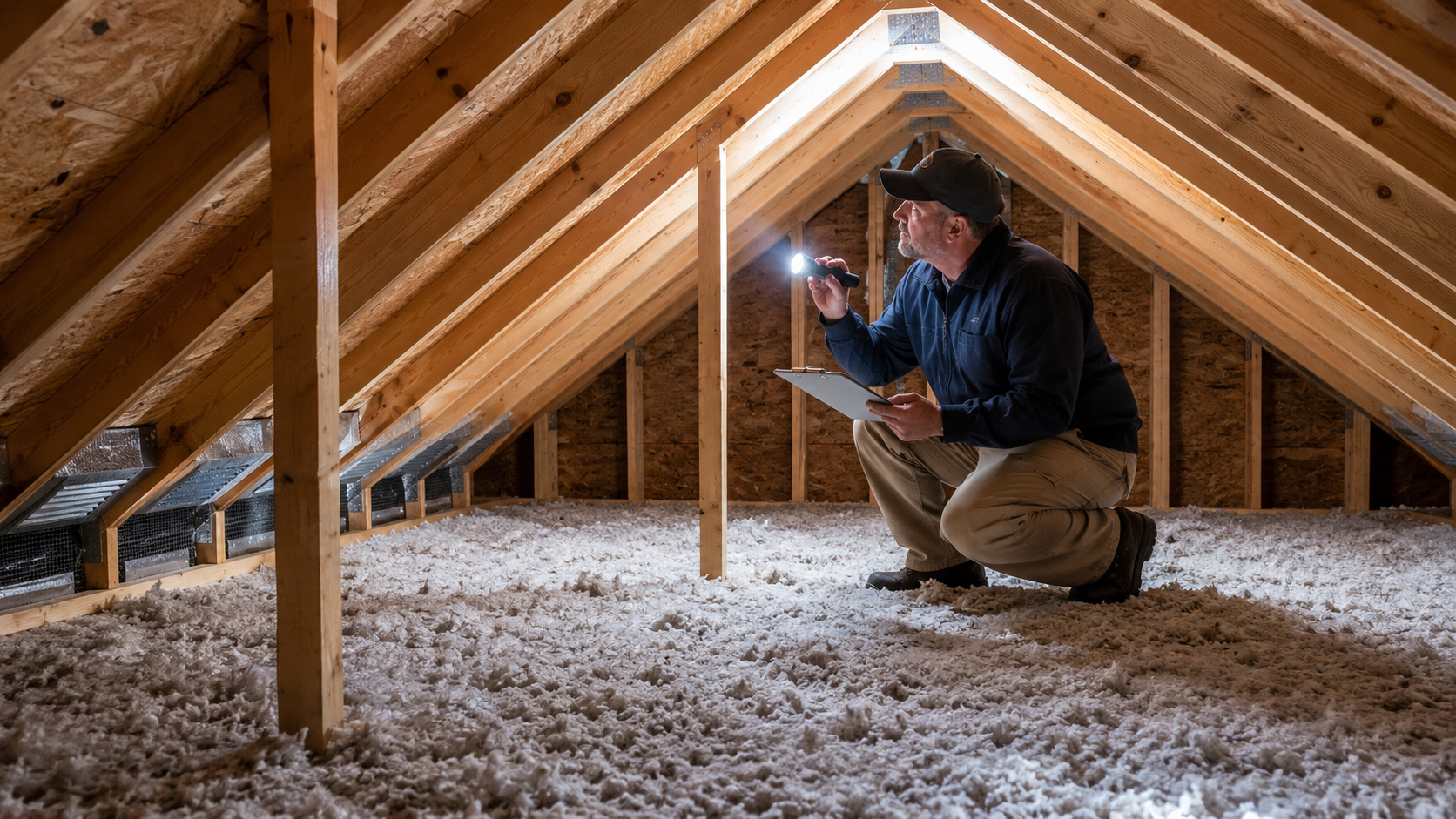
In a typical vented attic, cooler outside air enters through soffit vents near the eaves, moves beneath the roof deck, and exits through ridge vents, box vents, or other openings near the peak. This airflow helps release trapped heat and moisture that could otherwise contribute to mold, rust, wood deterioration, and damaged insulation. The US Department of Energy’s guidance on durable attics also explains how proper ventilation and moisture control help protect attic materials.
Proper attic ventilation may reduce some heat transfer into your home, but new vents alone will not guarantee lower cooling bills. We also need to check the insulation, ceiling air leaks, ductwork, roof leaks, and blocked soffits, while making sure bathroom fans and dryer ducts release humid air outdoors rather than into the attic.
What Are the Signs of Poor Attic Ventilation?
The signs of poor attic ventilation are not always easy to spot from outside your home. Some develop slowly and may initially look like an insulation, air-conditioning, or roof-leak problem.
Excessive Attic Heat
Every attic gets hot during a Mississippi summer, but excessive heat that lingers into the evening may signal a problem. Blocked intake vents or insufficient exhaust can prevent hot air from escaping properly. Poor insulation and air leaks between your attic and living space can make the problem worse.
Musty Odors or Visible Mold
A persistent musty smell or visible mold may indicate moisture buildup in your attic. Poor ventilation may contribute, but roof leaks, plumbing problems, condensation, or bathroom fans exhausting into the attic can also be responsible. Cleaning the mold without correcting the moisture source will only provide a temporary solution.

Damp or Damaged Insulation
Wet, flattened, clumped, or discolored insulation may no longer protect your home effectively. It can also indicate condensation or an active roof leak. We recommend fixing the moisture source before adding insulation so hidden damage to the roof decking and framing does not continue.
Rust or Wood Deterioration
Rust around roofing nails, fasteners, or attic equipment may indicate repeated condensation. Dark stains, warped decking, soft wood, and visible rot also require professional attention. Finding the source early may help you avoid more extensive and expensive repairs.
Higher Cooling Bills
Restricted attic airflow can trap heat and force your air conditioner to run longer without keeping the house comfortable. However, higher electricity bills do not automatically mean your attic ventilation is failing. Dirty filters, aging HVAC equipment, leaking ducts, air gaps, and insufficient insulation can cause similar problems, so we recommend checking the entire system.
Uneven Indoor Temperatures
Rooms directly below the attic may feel warmer than the rest of your home, even while the air conditioner is running. Heat buildup and poor roof ventilation could contribute to this temperature difference. During an inspection, we also check the insulation and ductwork rather than assuming the vents are the only cause.
Blocked or Damaged Vents
Soffit vents can become blocked by insulation, paint, dirt, or debris, while ridge and box vents may be damaged by storms or improper installation. Visible roof vents do not necessarily mean your attic has effective airflow. The intake and exhaust openings must remain clear and work together to move air through the attic.
Premature Roofing Wear
Shingles may curl, crack, or deteriorate because of age, severe weather, excessive attic heat, or trapped moisture. When we inspect worn shingles, we also consider the installation quality and the roof’s storm history. Our residential roof repair service can identify the likely cause and determine whether repair or replacement makes sense.
Ridge Vent vs Box Vent: Which Is Better?

The ridge vent vs box vent comparison does not have one correct answer for every home. We consider your roof shape, ridge length, attic layout, and available intake ventilation before recommending either system. Neither option will perform correctly if outside air cannot enter near the eaves.
| Vent Type | How It Works | Best Suited To | Key Consideration |
|---|---|---|---|
| Soffit vent | Draws outside air into the attic at the eaves | Most vented attic systems | Must remain clear of insulation and debris |
| Ridge vent | Provides continuous exhaust along the roof peak | Roofs with a suitable continuous ridge | Can provide more even exhaust across the roofline |
| Box vent | Releases air through individual roof openings | Roofs where a ridge vent is unsuitable | Several correctly positioned vents may be needed |
| Gable vent | Moves air through openings in the exterior gable walls | Certain traditional roof designs | May interfere with other exhaust vents when combined poorly |
| Powered vent | Uses a motor to pull air from the attic | Selected systems after professional assessment | May draw conditioned air through ceiling gaps without proper intake and air sealing |
A ridge vent often works well on a roof with a long, clear peak because it lets warm air escape across the roofline. Box vents can be a better fit for other roof designs, but the number and placement must be carefully planned. Mixing exhaust vents can disrupt airflow, so we choose a system that suits your roof and attic.
When Should We Inspect Your Roof Vents?
We recommend scheduling an inspection if you notice several warning signs, discover damaged vents after a storm, or do not know how your current attic ventilation is configured. Roof replacement is also a practical time for us to review the system because we can correct an unsuitable vent layout while completing the other roofing work.
During the inspection, we may examine the condition and placement of your intake and exhaust vents, blocked soffits, missing ventilation baffles, moisture stains, deteriorated decking, and visible leaks. We can also look for insulation covering the eaves or household exhaust ducts releasing humid air into the attic.
TopCo Roofing serves homeowners throughout Hattiesburg and the Pine Belt. Schedule your free roof inspection and let us determine whether your roof ventilation is working properly and what, if anything, needs to be corrected.
Concerned About Your Roof Ventilation?
Let our team inspect your roof and attic, identify potential airflow or moisture problems, and explain what needs attention.
Call 601-543-4687