
Essential Roofing and Repairs Guide: When and How to Fix Common Issues
Your roof usually shows warning signs before serious damage develops, such as lifted shingles, gutter granules, ceiling stains, and musty attic odors. Ignoring a small issue can get expensive fast because water may already be moving beneath the shingles, weakening the decking, and turning a simple fix into a major replacement.
This guide explains when roofing and repairs are needed, which warning signs matter, and how early action can protect your structure, indoor air quality, insurance eligibility, and resale value.
Spotting Roof Damage Early: Signs Every Property Owner Should Know
The sooner you catch roof damage, the easier it is to control the cost. Many property owners wait until water appears indoors, but by then the leak may have been active for weeks. A quick ground-level inspection twice a year, plus another check after major storms, can help you catch problems before they spread.
Exterior Warning Signs
Walk around the property and look up carefully. Many roof problems start small, but visible clues often appear before the damage becomes severe.
Watch for:
- Curled, cupped, or cracked shingles
- Missing shingle tabs
- Dark streaks from granule loss
- Lifted ridge caps
- Bent, loose, or rusted flashing around chimneys, vents, and roof edges
- Sagging rooflines that may point to rotted decking or weakened rafters
- Heavy asphalt granule buildup in the gutters
Granules protect shingles from sun, heat, and aging, so heavy buildup in the gutters is not harmless debris. In storm-prone areas, wind can also loosen shingles without tearing them off, creating hidden leak paths that may only show up during the next heavy rain.
Interior Warning Signs
Check your attic during the day with a flashlight, especially after storms or heavy rain. Interior symptoms often reveal roof problems before they are obvious outside.
Look for:
- Pinholes of sunlight through the roof decking
- Dark stains on rafters, sheathing, or insulation
- Damp or compressed insulation
- Musty attic odors
- Ceiling stains below the attic
- Peeling paint or bubbling drywall near rooflines
- Unexpected increases in heating or cooling costs
These signs may point to active leaks, trapped humidity, poor ventilation, or damage above the living space. If a closer inspection shows cracking, exposed underlayment, or major granule loss, targeted roofing and repairs may be needed.

Common Roofing Issues That Need Attention
Understanding the type of damage helps determine urgency, repair method, and cost. Not every roof issue requires roof replacement, but small failures should never be ignored.
Damaged or Missing Shingles
Wind, hail, falling branches, and aging adhesives can cause shingles to crack, crease, tear, or blow off. Even one missing tab exposes the underlayment and decking to water. Replacing individual shingles is usually straightforward when the damage is isolated, but widespread brittleness, granule loss, or repeated failures across multiple slopes may mean the roof is near the end of its service life.
Failed Flashing and Sealants
Flashing seals leak-prone areas around chimneys, skylights, vents, dormers, walls, and valleys. When caulk cracks, fasteners loosen, or metal separates, water can seep underneath and damage the decking. Early flashing work is one of the most valuable roofing and repairs tasks because it stops slow leaks before they become expensive.
Active Leaks and Water Damage
An active leak is not something to “watch for a few days.” Water can travel along rafters, trusses, and insulation, so the visible stain may not be directly below the entry point. Move furniture, place a bucket, take photos, and call a contractor. A temporary tarp may limit damage if conditions are safe, but it is not a permanent repair.
Poor Ventilation and Moisture Buildup
A roof system needs balanced airflow. Poor ventilation traps heat and humidity in the attic, which can age shingles from below, warp decking, and encourage mold growth. Ridge vents, soffit vents, and powered fans should be clear, balanced, and properly sized for the attic.
Repair vs. Replacement: Which Do You Need?
The choice between repair and replacement depends on the roof’s age, the amount of damage, and whether the decking is still sound. Smart roofing and repairs can extend the life of a solid roof, but patching a failing system usually just delays a bigger bill.
| Situation | Repair May Be Enough | Replacement May Be Better |
|---|---|---|
| Roof age | Still within its expected service life | Past roughly 80% of its realistic lifespan |
| Damage area | Less than about 30% of the roof is affected | Damage is widespread across multiple slopes |
| Decking condition | Decking is solid | Decking is soft, rotted, or sagging |
| Type of issue | One clear cause, such as storm damage, failed flashing, or a fallen branch | Multiple leaks, heavy granule loss, or curling shingles throughout |
| Repair history | No major pattern of failed patches | Old patches are failing or leaks keep returning |
| Example | A 12-year-old roof with one damaged slope | A 19-year-old roof with curling shingles on every slope |
Essential Repair Techniques for Different Damage Types
Every type of roof damage needs the right repair method. Some small fixes may seem simple, but roof work is unforgiving. Poor nail placement, mismatched shingles, or bad flashing details can create leaks that cost more than the original issue.
Targeted Shingle Replacement
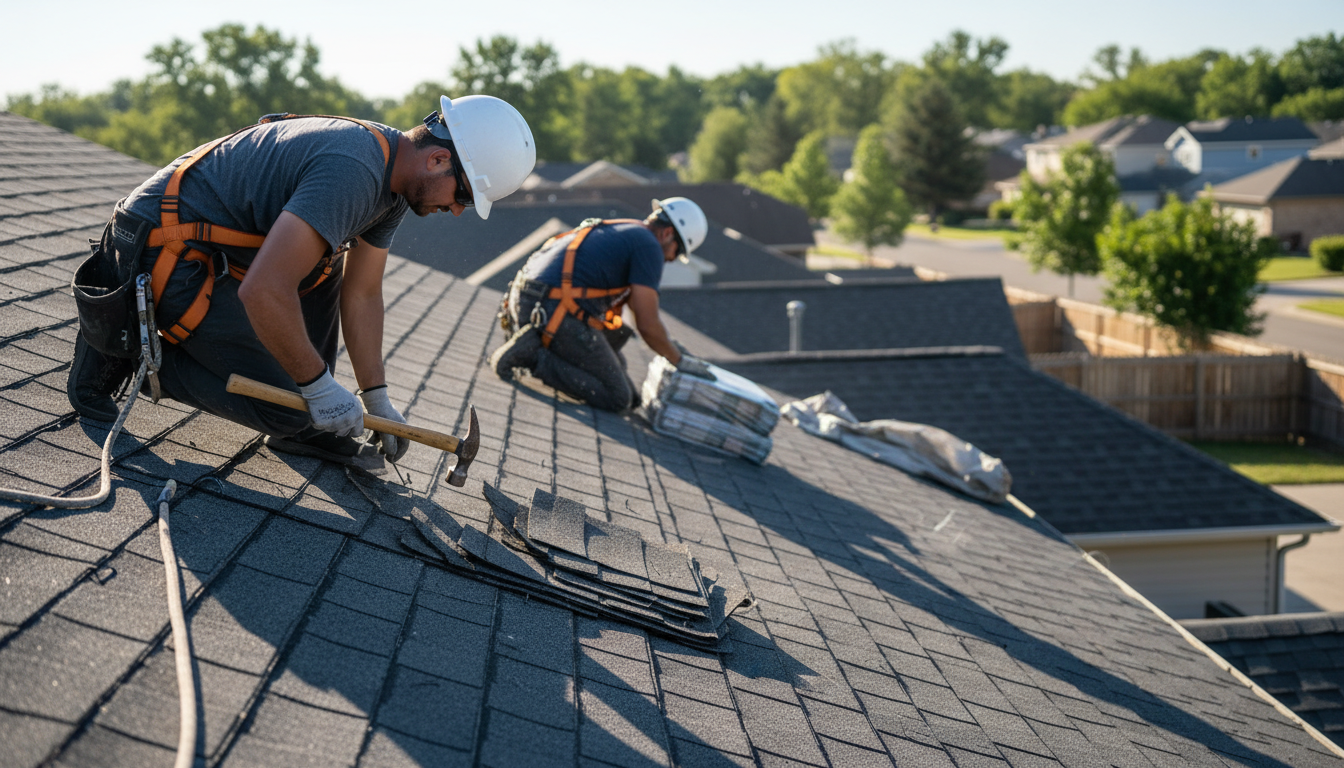
The damaged shingle is removed, a matching replacement is installed, and fasteners are placed according to the product and wind-zone requirements. Done correctly, this type of roofing and repairs work should blend with the existing roof and preserve manufacturer standards.
Flashing Resealing or Reinstallation
Old sealant and damaged flashing are removed, the surface is cleaned, and new step flashing or counter flashing is installed in proper overlapping layers. This is precision work. If flashing is installed backward, buried incorrectly, or treated as a caulk-only fix, it will fail again.
Decking and Underlayment Patching
Water-damaged plywood should be cut back to sound material, replaced with proper support, covered with suitable underlayment, and re-shingled. Once decking is soft, covering it with new shingles is trash workmanship. It hides the problem instead of fixing it.
Ventilation Correction
Blocked soffit vents should be cleared, baffles added where insulation crowds the eaves, and intake and exhaust capacity balanced. This protects the entire roof system, not just one damaged spot.
Professional roof repair services should use manufacturer-compatible materials, clear workmanship standards, and proper documentation. Chimney flashing repairs are especially valuable because one small failure can cause major water damage.

The Real Risks of Delaying Necessary Roof Repairs
Putting off a small repair almost never saves money. The National Roofing Contractors Association notes that proactive maintenance helps identify roof problems early, before they turn into costly failures. Once water finds a path inside the roof assembly, the damage can spread quickly through decking, insulation, framing, and interior finishes.
Structural and Decking Damage
Sustained moisture can rot plywood decking and eventually affect rafters or trusses. What starts as a modest shingle repair can turn into a tear-off and structural rebuild once the wood softens.
Mold, Mildew, and Air Quality
Wet insulation and damp framing create ideal conditions for mold. Once mold spreads through the building cavity, cleanup may require insulation removal, drywall replacement, and air-quality treatment. Early roofing and repairs are far cheaper than restoring damaged interiors later.
Insurance and Property Value Impact
Insurance carriers may inspect roof condition during underwriting or renewal, especially on older properties. A visibly neglected roof can create coverage problems, while documented roofing and repairs can support stronger claim conversations and reassure future buyers.
For commercial properties, flat-roof systems require contractors experienced with TPO, EPDM, and modified bitumen. These systems fail differently than shingle roofs and should not be treated with one-size-fits-all repair methods.
Preventive Maintenance to Extend Your Roof’s Lifespan
A well-maintained asphalt roof can outlast a neglected one by years. Performance depends not only on the shingle brand, but also on inspection, cleaning, ventilation, and timely roofing and repairs.
Basic Maintenance Schedule
Inspect the roof twice a year, ideally in spring and fall. Check again after major wind, hail, or heavy rain. Clean gutters at least twice annually to prevent water backup and catch early signs of granule loss.
Keep the Roof Surface Clean
Leaves, branches, pine needles, and moss trap moisture against shingles and speed up wear. Use a soft-bristle broom or low-pressure rinse to remove debris. Avoid pressure washing because it strips granules and shortens shingle life.
Manage Nearby Trees
Overhanging limbs drop debris, scrape shingles, and give animals access to soffits and fascia. Trim branches away from the roof surface, and check for impact damage after storms.
Maintain the Attic Environment
Proper insulation and ventilation help control heat, condensation, and moisture buildup. Have a professional check R-value and airflow balance every five to seven years, or sooner if you notice condensation, musty odors, or uneven indoor temperatures.
Choosing the Right Contractor for Quality Roofing and Repairs
The biggest factor in repair quality is the installer. A trained crew using standard materials will outperform a sloppy crew using premium products. When hiring for roofing and repairs, look for proof, not promises.
Verify Credentials and Insurance
Ask for a current state license, general liability insurance, and workers’ compensation coverage. Manufacturer certifications such as GAF Master Elite, Owens Corning Platinum, or CertainTeed SELECT ShingleMaster can also signal proper training and installation knowledge.
Demand a Written Scope and Warranty
A reputable contractor should provide a written scope covering the repair area, materials, installation steps, cleanup, warranty terms, and exclusions. Vague verbal promises are red flags. If the estimate does not explain what will be removed, replaced, sealed, and inspected, it is not detailed enough.
Hire Local and Established
Storm-chaser crews often appear after major weather events and disappear before warranty issues show up. A local contractor with a real address, proven track record, and community presence is more likely to stand behind the work. The cheapest repair is only cheap until it fails.
Protect Your Roof Before Small Problems Become Expensive Ones
A roof is a complete system, not just a layer of shingles. It protects your structure, insulation, electrical components, indoor air quality, insurance eligibility, and property value, which is why regular inspections and fast action on small problems matter.
Use this guide to make smarter roofing and repairs decisions before minor damage turns into a major expense. If the issue involves flashing, decking, ventilation, active leaks, or more than one damaged shingle, do not rely on guesswork.
Topco Roofs provides expert inspections, fast repairs, full replacements, manufacturer-backed warranties, and workmanship you can trust. Schedule your free roof inspection today and get a clear, honest recommendation before the damage spreads.
Ready to Protect Your Roof?
Topco Roofs helps homeowners and property managers catch roof issues early, choose the right repair approach, and avoid unnecessary replacement costs. We will inspect your roof, explain what is actually happening, and recommend the right roofing and repairs plan to keep your property protected for years.
Get a Free Roof Assessment